













Ice Box vs Ice Pack: Which Is Better for Cold Chain Shipping?
If you’ve ever had a 2–8°C shipment arrive with a temperature excursion, you already know the uncomfortable truth: “more cold” doesn’t automatically mean “more compliant.” The choice between an ice box (a hard-shell ice container sometimes called an “ice block”) and an ice pack (a soft, sealed gel pack) can change not just hold time, but also freeze risk, pack-out repeatability, and how much your results vary across summer vs winter lanes.
This guide breaks down ice box vs ice pack decisions using criteria that matter to cold chain procurement and operations teams—then shows how the “best” choice shifts across common lane durations, ambient scenarios, and even everyday cooler use.

Ice box vs ice pack at a glance (what changes by lane)
|
Decision factor |
Ice box (hard-shell) tends to win when… |
Ice pack (gel pack) tends to win when… |
|---|---|---|
|
Primary objective |
You want durable handling and rigid, repeatable geometry |
You want placement flexibility and smoother temperature distribution |
|
Freeze risk (2–8°C) |
Payload isn’t freeze-sensitive, or you can reliably buffer and separate rigid cold sources |
You need easier spacing, separation, and fine-tuning to avoid cold spots |
|
Pack-out repeatability |
You want a fixed layout that’s easy to train and audit |
You’re balancing multiple payload sizes and need adaptable pack-outs |
|
Clean handling |
You want strong containment with fewer puncture/leak concerns |
You want lightweight components and easier staging for high-volume ops |
|
General cooler use |
You don’t want packs shifting/crushing under load |
You need packs to conform around food/drinks and fill voids |
Pro Tip: If your product is truly sensitive to dropping below 2°C, the “real” comparison is often ice vs PCM, not ice block vs ice pack. We’ll cover when to step up to PCM later.
Definitions (so we’re comparing the right things)
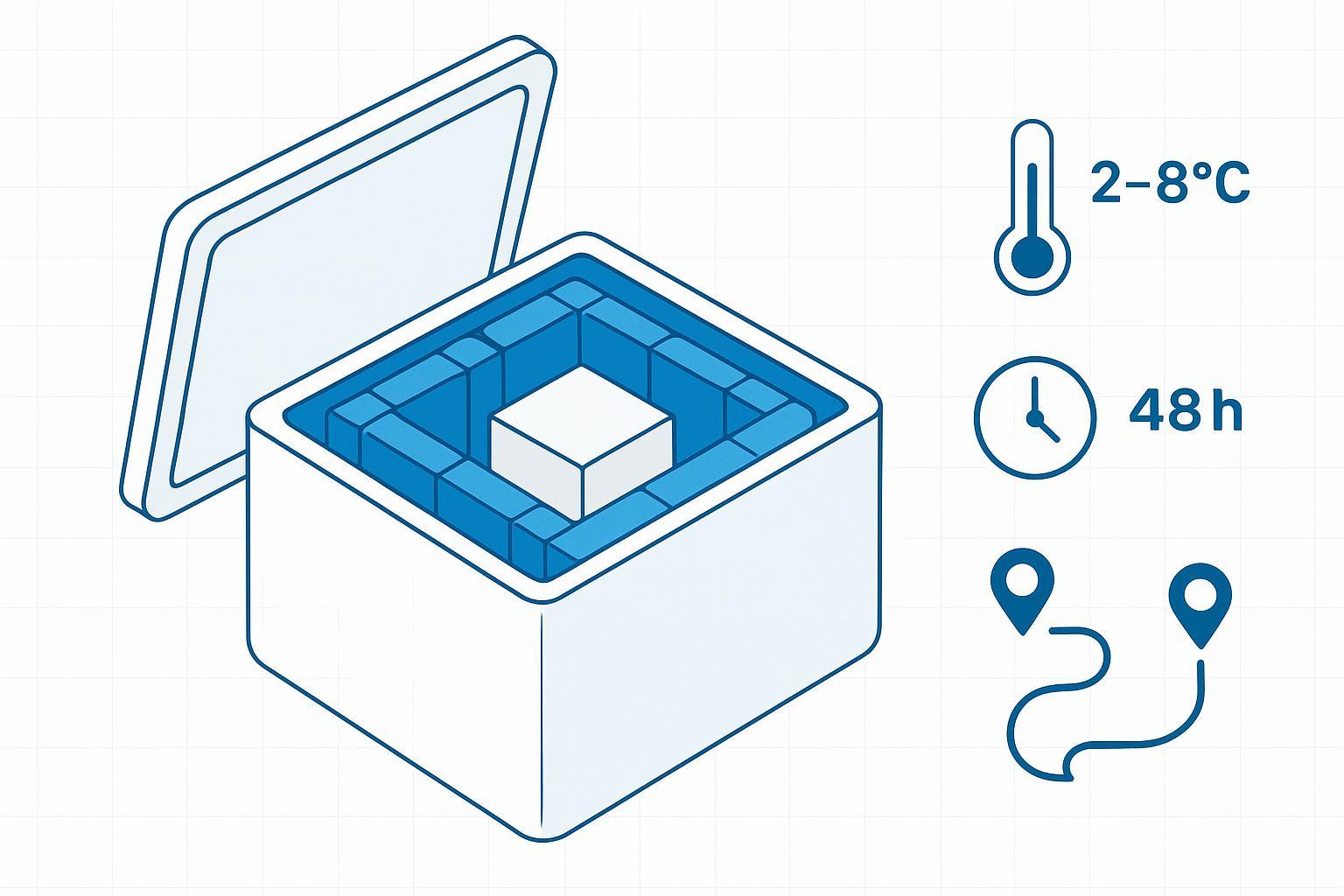
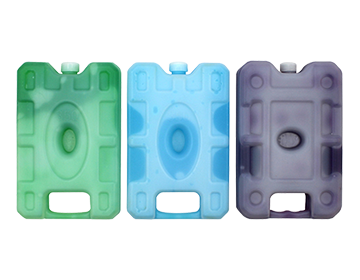
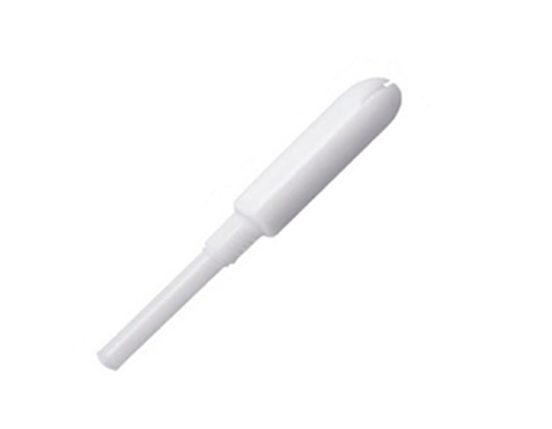
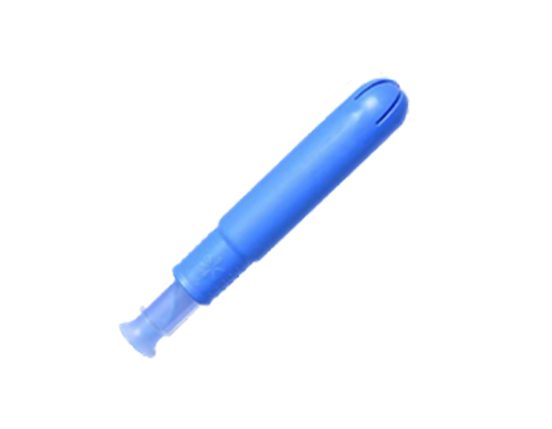
Ice box (hard-shell ice box) is a rigid container with a hard outer shell that holds frozen media inside (commonly water or gel). It behaves more like a reusable rigid coolant module: predictable shape, durable handling, and easier containment—yet still capable of creating localized cold spots if placed too close to a 2–8°C payload.
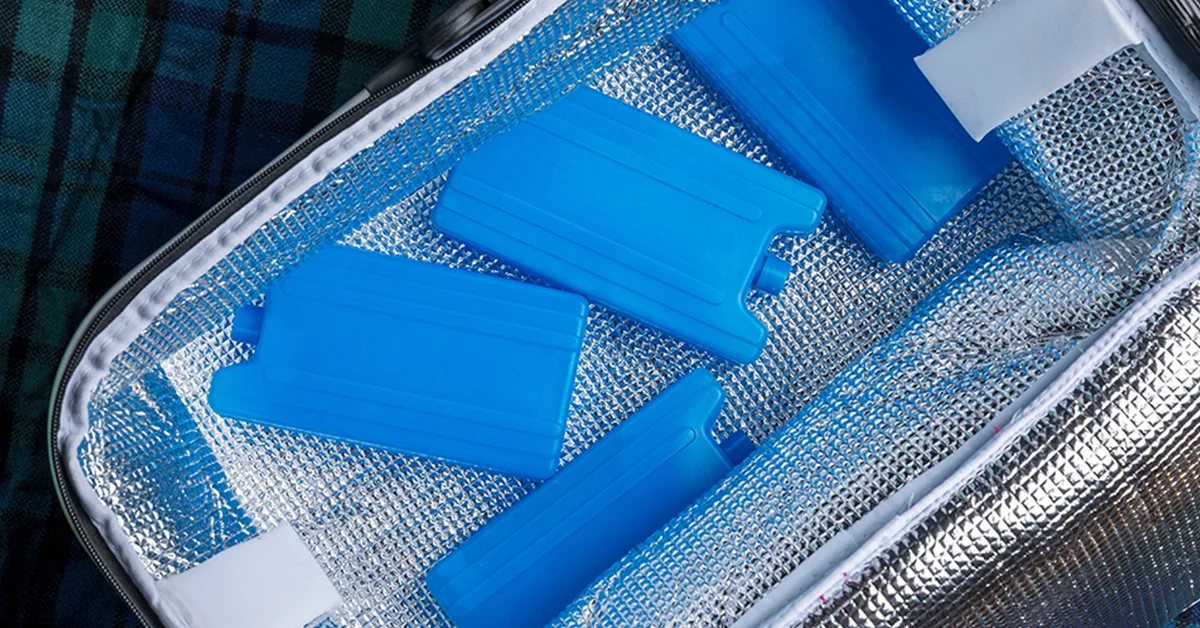
Quick terminology note: An ice box is sometimes called an “ice block” in everyday conversation, but in cold chain documentation it’s clearer to distinguish a hard-shell ice box from block ice (a bare frozen slab) because the handling and pack-out behavior are different.
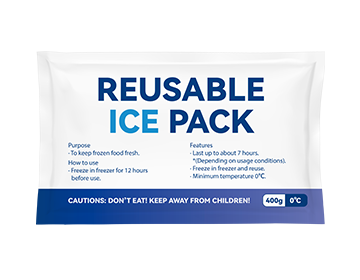
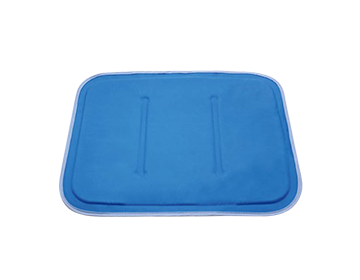
Ice pack (gel pack) is a soft, sealed pouch filled with water-based gel (or similar). Many cold chain operations use ice packs because they’re easy to stage, distribute around a payload, and standardize across different shipper sizes—and they generally create less mess.
There’s also a third category worth naming because it comes up in real 2–8°C decisions:
-
Phase change material (PCM) packs are designed around a specific melt point, which helps hold a tighter temperature band. The Insulated Products Corporation guide to cold chain shipping explains why PCMs are often chosen when temperature precision matters more than brute cooling capacity.
If you’re building an internal glossary or SOP, this is also the moment to align on language like cold chain packaging coolant selection (i.e., choosing refrigerants based on lane profile, not habit).
Criterion 1: Temperature control vs cooling endurance
When people say “block ice lasts longer,” they’re usually talking about endurance: bigger thermal mass + slower melt. That can be useful for longer lanes or hotter ambients.
But endurance isn’t the same as control.
-
Ice blocks can hold cold for a long time, but they don’t inherently “aim” for 2–8°C.
-
Ice packs can be easier to distribute around the payload (top/sides/bottom depending on SOP), which often improves temperature uniformity inside the shipper.
For many refrigerated shipments, what you really want is a stable internal profile—not a hard initial pull-down that overshoots below 2°C.
If your packaging objective is “keep the box cold,” ice blocks can be effective. If the objective is “keep the payload inside 2–8°C,” you’re usually better served by a system (shipper + insulation + refrigerant conditioning + pack-out) designed around that band.
Criterion 2: Freeze risk is usually the deciding factor in 2–8°C
Freeze risk is easy to underestimate because a logger can show an acceptable average while a corner of the payload briefly drops below spec.
A practical rule: the colder and more rigid the refrigerant, the more you need to manage separation and conditioning.
The TempAID Cold Chain team notes in its explainer on conditioning gel packs for pharmaceutical and vaccine shipping that fully frozen packs can drive shipper temperatures below 0°C for extended periods—one reason conditioning is used to reduce freeze risk in 2–8°C lanes.
What this means for ice box vs ice pack:
-
Ice blocks can create strong cold spots if they contact—or sit too close to—product.
-
Ice packs aren’t “safe by default,” but they’re typically easier to position with consistent spacing and buffering.
If your winter lanes already flirt with below-2°C exposure, your best improvement may be less about switching from ice block to ice pack, and more about:
-
consistent conditioning practices,
-
a standard buffer layer (corrugate/foam) between refrigerant and payload,
-
and a validated pack-out for your worst-case ambient.
⚠️ Warning: Don’t treat “more coolant” as a safety margin. Overpacking refrigerant can increase freeze risk just as easily as underpacking can increase warming excursions.
Criterion 3: Operational standardization and handling
Procurement teams don’t just buy cooling media—they buy process stability.
Here’s where ice packs often win in practice:
-
Standard shapes are easier to train and audit. In its article on choosing a reusable ice pack for your cooler, INTCO highlights why uniform packs are easier to standardize than loose ice (including reduced meltwater mess and more predictable cooling behavior).
-
Pack-out flexibility. When payloads vary in size or shape, flexible packs can fill voids and reduce shifting.
Where ice blocks can win:
-
Repeatable placement with rigid geometry. If your shipper has fixed channels or you’re running a consistent payload configuration, blocks can simplify placement.
The trade-off is that rigid placement can be unforgiving: if a block ends up too close to a freeze-sensitive product, the cold spot risk rises.
A scenario guide: how the “best choice” changes by duration and season
The matrix below isn’t a substitute for lane validation, but it’s a practical starting point for procurement conversations.
12–24 hours (short lanes)
-
Summer / hot ambient: Ice packs often make sense because you can distribute cooling more evenly and avoid extreme cold spots. (This is the common starting point for ice packs for cold chain shipping—and a useful baseline for ice blocks for cold chain shipping when you’re optimizing for endurance and have good buffering.)
-
Shoulder seasons: Either can work; choose based on how standardized your pack-out is.
-
Winter / cold ambient: Prioritize freeze risk controls (conditioning, buffering). Ice packs are often easier to manage for spacing and separation.
24–48 hours (common parcel durations)
-
Summer / hot ambient: Ice blocks may offer endurance, but only if your shipper system manages cold spots. Ice packs can still be strong if insulation and pack quantity are well matched.
-
Shoulder seasons: Ice packs tend to be the “default” because they’re easier to standardize across multiple lanes.
-
Winter / cold ambient: If you’ve had freeze excursions, focus on conditioning discipline and consider stepping up to PCM rather than simply changing ice geometry.
48–72 hours (longer lanes, higher variability)
At this duration, the biggest risk is variance: delays, handoffs, and ambient swings.
-
If you choose ice blocks: you’re betting on endurance. Make sure the pack-out includes consistent separation and does not place blocks directly adjacent to the payload.
-
If you choose ice packs: you’re betting on control and placement discipline. Ensure the SOP is followed and conditioning/staging doesn’t drift.
For longer lanes, many teams move toward validated systems and tighter refrigerant selection. In those discussions, it helps to frame this as “coolant choice + qualification” rather than “ice blocks vs ice packs.”
When you should consider PCM packs instead of either
If your shipments are in the 2–8°C band and any of the following are true, PCM deserves a serious look:
-
You ship freeze-sensitive products (even brief dips below 2°C are costly).
-
Your lanes cross extreme ambient profiles (hot summer + cold winter).
-
You need tighter repeatability for audits, qualification, or customer SLAs.
INTCO notes on its Ice Pack page that it can provide temperature-range options (including PCM-style materials across different temperature points), which is the right direction when the requirement shifts from “keep cold” to “hold a target band.” Practically, this is the situation people are trying to solve when they search for 2–8°C shipping ice packs vs PCM. If you need broader context on where cold chain products fit operationally, INTCO also shares a high-level overview in How cold chain products enhance food supply chain efficiency.
A simple decision framework your team can reuse
If you need a quick internal rule of thumb:
-
Start with the payload requirement. If the payload can’t tolerate freezing, treat freeze risk as a first-class constraint.
-
Decide whether endurance or control is the dominant need for your lane.
-
Standardize the pack-out (conditioning, placement, buffer layers) before you declare the coolant type “the problem.”
-
Validate on worst-case conditions, not average days.
Next steps (low-friction)
If you’re comparing refrigerants for multiple lanes, it’s usually fastest to document three things first: temperature band, duration, and worst-case ambient. Then you can narrow down whether an ice block, an ice pack, or a PCM pack is the right baseline before investing in deeper qualification.
For teams that need OEM/ODM support for reusable cooling media and standardized pack-out components, INTCO Healthcare (INTCO Medical) offers both rigid and flexible cold chain coolant options and customization capabilities that can support cold chain workflows—without forcing a one-size-fits-all recommendation.
FAQ
Are ice boxes safer than ice packs for 2–8°C shipping?
Not automatically. A hard-shell ice box can create strong cold spots if it sits too close to the payload. Ice packs (gel packs) are often easier to space out and buffer. In either case, separation layers and a validated pack-out matter more than the outer form factor.
If my product can’t freeze, should I avoid ice entirely?
If even brief dips below 2°C are unacceptable, consider PCM packs with a phase point near your target band (often around +5°C). Water-based ice (in an ice box or gel pack) can work, but it typically requires stricter conditioning and buffering to manage freeze risk.
What’s the difference between an ice box and block ice?
An ice box is a hard-shell container that holds frozen media and behaves like a reusable rigid coolant module. Block ice is a bare frozen slab. They differ in handling, placement repeatability, and how cold spots develop in a pack-out.
Do ice packs need conditioning for cold chain shipments?
Often, yes. Fully frozen gel packs can pull shipper temperatures below 0°C for extended periods. Conditioning (bringing packs to a controlled starting temperature) is commonly used to reduce freeze risk—especially in 2–8°C lanes.
WORLD HEALTH EXPO MIAMI 2026
INTCO Medical Showcases Cold & Hot Therapy Solutions at Hospitalar 2026