















What to Look for in a Custom Gel Pack Manufacturer
Hospitals, clinics, and eldercare facilities depend on gel packs for safe hot and cold therapy—seemingly simple products that can quickly become compliance liabilities if the supplier isn’t rock solid. If you’re shortlisting a Custom Gel Pack Manufacturer, don’t stop at price and catalog shapes. You’ll need evidence of regulatory alignment, a quality system you can audit, repeatable performance tests, real ODM depth, and a resilient supply chain you can count on when volumes spike.
Below, I’ll walk you through a practical, audit‑ready approach that procurement and compliance teams can apply today—grounded in FDA and ISO expectations and the acceptance tests that actually predict performance for reusable hot cold gel packs and flat gel ice packs.
Treat gel packs as medical‑adjacent devices
Gel packs can look like simple therapy items, but in healthcare settings they’re often treated as medical‑adjacent: they touch patients, show up in incident reports when they leak, and get scrutinized during audits. So the goal isn’t to turn your purchase into a legal exercise—it’s to make sure the supplier can prove what they sell and how they control quality.
In the U.S., many hot/cold packs are generally considered low‑risk (often Class I and commonly 510(k)‑exempt). Even so, buyers should still confirm the manufacturer is properly registered and listing the devices they market. If you want the official categories, the ECFR Part 890 index is the plain‑text place to verify where these products typically sit.
On the quality side, most serious medical suppliers run a quality system aligned with ISO 13485 (the medical device quality standard). The practical takeaway for procurement is simple: you want a manufacturer with documented controls for materials, sealing/filling processes, inspections, and change control—not just a nice catalog.
How to verify a Custom Gel Pack Manufacturer’s compliance

Ignore vague “FDA approved” language for these products. Instead, ask for straightforward proof you can file and audit. Here’s a simple, buyer‑friendly checklist:
-
Registration & listing proof: Ask for the supplier’s registration information and the specific device listing entries (by product family/SKU) so you can verify the items being sold are actually listed.
-
ISO certificate you can validate: Request an ISO 13485 certificate and confirm it matches the correct factory sites and the right product scope (hot/cold therapy products or an equivalent family).
-
Skin‑contact safety support: Ask for a short summary showing how the materials were evaluated for skin contact (test summary or documented rationale). For the official framework that many suppliers reference, see FDA’s guidance on using ISO 10993‑1 for biological evaluation.
If a supplier offers special variants (for example, systems with pumps/circulation), treat that as a flag to double‑check whether additional regulatory steps apply before you standardize it across facilities.
Technical acceptance criteria that actually predict performance
Documents are necessary, but performance keeps patients safe and complaints low. Ask the gel pack manufacturer for recent QA/QC and validation summaries that address common failure modes in flexible packs:
Start with seal integrity and strength. Consistent, validated heat seals matter more than any marketing claim. You’ll often see seal strength measured per methods like ASTM F88 to evaluate peel strength across the seal width, and gross leaks detected via bubble‑emission methods such as ASTM F2096. For internal pressurization stresses, manufacturers may use burst or creep testing (e.g., ASTM F1140 or F2054) to characterize failure pressures and process windows.
Because puncture and drops are an everyday reality in clinical settings, ask for puncture or impact resistance data from flexible‑package standards (for instance, dart impact per D1709 or related film tests) and representative drop tests under expected distribution conditions. For shipping configurations, many suppliers validate transit robustness using distribution simulations and published methods. A clear primer comparing these distribution test frameworks is provided by Oliver Healthcare Packaging in their explanation of how to choose between ISTA 3A and ASTM D4169 for packaged medical products; see their discussion of ISTA vs ASTM distribution testing.
Thermal performance deserves its own file note. There is no single prescriptive “hold‑time” standard for hot cold gel packs, so competent manufacturers define protocols: mass ratio of pack to object, ambient temperature and airflow, insulation, and pass/fail thresholds for cold and hot phases. For reusable gel packs, insist on reuse‑cycle testing that proves the gel and seams survive repeated freeze‑thaw or heating cycles without leaks, deformation, or phase separation—data that supports the “reusable” claim in real life.

ODM depth that goes beyond logos and shapes
A true Custom Gel Pack Manufacturer should demonstrate engineering control, not just printing capabilities. Probe how they design and lock down a formulation to hit your thermal curve targets and safety profile; how they choose films or laminates (PEVA, TPU, PVC, or multilayer) for low‑temperature flexibility, sealability, print adhesion, and puncture resistance; and how they run DFM reviews, pilot builds, and change control.
Ask for summaries of IQ/OQ/PQ validation for filling and sealing, tooling qualification records, and the notification thresholds that trigger change‑control communication to customers. If you need a partner who can iterate designs quickly, confirm prototype lead times and evidence of past pilot‑to‑mass‑production transitions. For a concise view of typical ODM scope and processes, you can review the OEM and ODM overview page from a major healthcare supplier as a general reference point: OEM and ODM services overview.
Supply‑chain scale and stability
For hospitals and eldercare networks, resilience can be the difference between stockouts and continuity of care. During RFIs, request named manufacturing sites, monthly capacity bands, standard and surge lead‑time windows, and minimum order quantities for both standard and bulk gel packs. Confirm continuity plans for single‑point failures and the supplier’s export compliance experience.
Dual‑site manufacturing across regions can reduce geopolitical and logistics risk. Many leading suppliers operate networks spanning China and Vietnam to balance cost, capacity, and lead times; such geographic diversification, combined with lean production practices and documented supplier controls, is a positive signal. For an example of what a global manufacturing network disclosure looks like, see this general reference page on a manufacturer’s global footprint: Global manufacturing network overview.
FAQ for procurement teams
Q: Are gel packs “FDA approved”? A: For many gel packs, “FDA approved” isn’t the right phrase. What you should look for is a manufacturer that’s properly registered and can show device listings for the exact product families you’re buying. That’s the paper trail auditors care about.
Q: What does “ISO certified” really mean for a gel pack manufacturer? A: It means an independent body has certified the supplier’s quality system. In practical terms, you want an ISO 13485 certificate that matches the correct factory sites, the right scope, and a current expiration date.
Q: How should we compare reusable gel packs to disposable gel ice packs? A: Reusable gel packs should come with evidence they can survive repeated freeze‑thaw or heating cycles without leaking. Disposable gel ice packs are more about reliable one‑time performance and safe materials. Compare total cost, complaint risk, and waste across your therapy mix.
Q: Can we order bulk gel packs with our own branding? A: Yes. Most suppliers can support bulk gel packs and private labeling. Just be specific in your RFQ about size, film type, printing, packaging, and performance targets so the supplier can quote tooling, testing, and lead times accurately.
Q: What safety documentation should we keep on file? A: Keep it simple: proof of registration/listing for the products, an ISO 13485 certificate, a short skin‑contact materials safety summary, summaries of seal/fill process controls, and the supplier’s change‑control policy (what changes trigger customer notification).
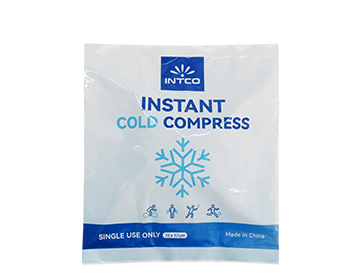
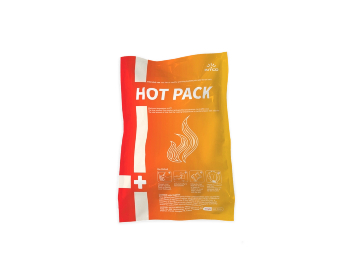
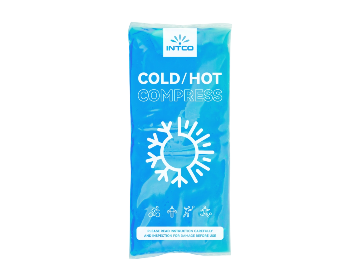
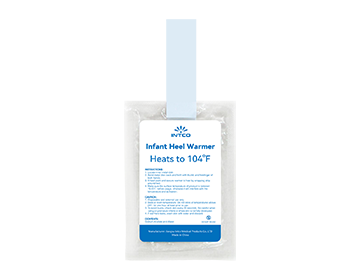
Next steps: Build a shortlist using the compliance package and test expectations above, then request pilot samples with defined acceptance criteria. If you’re exploring an OEM or ODM partner with dual‑site capacity in China and Vietnam and a global supply network, a neutral example to review is INTCO Healthcare, which publicly discusses OEM and ODM services and global manufacturing on its site. Engage any candidate in a small pilot to validate seal integrity, leak resistance, thermal curves, and reusability cycles before scaling orders.